Have you ever thought that writing 5 lines of code instead of 20 can help reduce carbon footprint? But, since when, coding started impacting the environment? The answer is, since it was introduced.
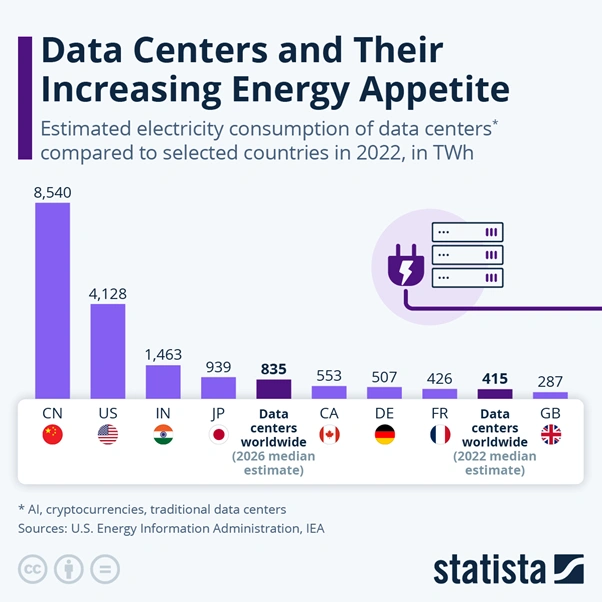
Nowadays, the internet has taken over most things and business processes, and people think that when everything is online, there are not many natural resources consumed. But hang on, resources are still used, and companies still need physical spaces where they can manage exabytes of data. These data centers need electricity that never goes off. They now use as much electricity as some countries.
That means every line of code, every feature, and every app you build adds up to a shared environmental cost!
What The Heck is Green Coding?
Green coding means writing software in a way that uses less energy, memory, and processing power, so it’s better for the planet. It’s about being smart with how to write code and how to run it. So, not just writing code and covering more space in a computer, but making it work efficiently.
But Why Green Coding Matters?
Because website development needs resources from the day you plan and run the website or software online. And it’s not only about human resources. Tech alone accounts for 4% of global greenhouse gas emissions, and inefficient code only makes that worse.
Example: When a developer writes a loop that runs 1,000 times instead of optimizing it to 10, the program consumes more CPU cycles. More CPU cycles mean more electricity drawn from data centers. That wasted power, at scale, directly adds to carbon emissions and harms the environment unnecessarily.
Therefore, developers and data managers need to think logically and straightforwardly. Try to finish a program with fewer lines of code. Ensure clean structure and avoid wasteful loops or API calls.
Example: Google’s AI models have become more energy-efficient. One Gemini query now uses five drops of water and emits only 0.03 g of CO₂, down significantly from last year. However, some experts caution that they still require full transparency, as the actual use may be larger than it appears.
How Does Computing Consume a Lot of Energy?
Computing consumes a lot of energy for various reasons. Scroll down to know the crucial ones in the space below.
- Data Centers Run 24/7 – Like Mini Cities: Every Netflix binge, TikTok scroll, or AI prompt needs to run through powerful computers stored in data centers. These centers never sleep; they consume electricity day and night. In 2022, they used around 240 – 340 terawatt-hours.
That’s 1-1.3% of all the world’s electricity just for data centers. - Servers Aren’t the Only Energy Hogs: It’s not just the computers; it’s the cooling, lights, and backup systems that cost energy too. In average data centers, about 30-40% of power is used for cooling and infrastructure.
- AI & Cloud Workloads Are Turbocharging Energy Use: Because of AI and cloud apps, power use is also increasing. The IEA expects global data center energy demand to more than double. In simple terms, an AI chatbot query can use 10x more energy than a normal web search.
- Places like Ireland Feel the Strain: In countries where data center growth is booming, electricity demand is spiking. In Ireland, data centers already use 18% of the nation’s power – and that’s expected to rise to 32% by 2026. That’s enough to power most homes!
How to Practice Green Coding to Reduce Carbon Footprint?
Then what to do to save energy and the Earth? Developers can play their part by following some ways. They can practice green coding and help to reduce the carbon footprint.
1. Write Efficient Code:
When you write fewer lines of code, it takes less time for the computer to work. It requires less electricity, which saves energy. Create logic by taking enough time so you don’t have to write lengthy instructions. No matter whether you are a novice coder or an experienced one, you can still write instructions that take less space.
Example: A loop that runs 10 times instead of 1,000 saves massive processing power.
2. Optimize Algorithms:
“Write a few lines code,” easier said than done! For this, think of algorithms as recipes. A faster recipe cooks the same dish with fewer steps. Everyone can have a different path to the same destination. For this, optimize algorithms carefully. It will help you understand what works best for the software and environment. Your aim should be to complete the work impeccably while using fewer codes.
Example: Using a sorting algorithm like merge sort instead of a slower one like bubble sort reduces CPU time, which saves energy.
3. Reduce Unnecessary Calls & Queries:
Every additional API call or database query consumes server resources. Therefore, only make API calls that are essential for your software. Discuss with project managers, the client, and fellow developers to find out which APIs are inevitable. Taking some extra steps to create something impeccable not only helps your software but also enhances your expertise.
Example: Instead of fetching all user data when you only need a username, just request the username. Simple! It will save processing and energy.
4. Choose Energy-Efficient Languages & Tools:
Many programming languages are present nowadays. They have their pros and cons. Often, some IDEs or libraries provide lengthy, ready-to-use code, while others offer shorter code. If the tools fit your software needs, use the energy-efficient ones. It’s because not all programming languages use the same amount of energy.
Example: Studies show C and Rust are more energy-efficient than Python or JavaScript.
5. Use Caching Smartly:
Fetching fresh data every time uses power. Caching stores commonly used data, so the system doesn’t have to repeat heavy work. It helps to save both processing time and energy. It also allows apps and software to run faster, which improves customer experience. However, remember not to overuse caching, as this may result in displaying outdated information. The key is to strike a balance between freshness and efficiency.
Example: Instead of recalculating “trending posts” every second, cache it and update every 5 minutes.
6. Clean Up Unused Code:
Many times, developers focus more on writing new code, but do not clear off the old lines of code. Dead or unused code still runs in the background; it wastes resources. Examine code sections to find whether they are still useful or just here to take up space.
Example: A debug logger left running can eat CPU cycles unnecessarily. Removing it saves energy.
7. Minimize Data Transfer:
The more data is sent across the internet, the more energy is used. So, being a coder, you should keep transfers as light as possible. Compress files, remove unnecessary code, and send only relevant information. Even small actions like optimizing images or trimming responses reduce internet traffic, cut costs, and lower carbon emissions.
Example: Compress images on a website. A 2 MB image reduced to 200 KB saves bandwidth, speeds up the site, and uses less power.
8. Green Hosting & Cloud Providers:
Not all hosting services are eco-friendly. Traditional data centers run on fossil fuels and consume vast amounts of electricity for servers and cooling. Green hosting providers, on the other hand, use renewable energy like wind or solar to power their systems. For example, companies like Google Cloud and Microsoft Azure have committed to becoming carbon-neutral.
9. Use Energy-Efficient Devices for Development
The device developers use also consume power. Old laptops, desktops, or inefficient hardware use more energy and heat up faster. Upgrading to energy-efficient devices reduces electricity usage. For example, an M1 MacBook uses almost 60% less energy than older Intel-based systems. Over time, this saves both money and carbon emissions while boosting performance.
Final Thought
A lot of developers are already following green coding. It requires less energy, but slightly more time from the developer to think of the logic that can be written in a few lines. It’s about being thoughtful, intentional, and aware that every line of code has a hidden energy cost.
By writing efficient, clean, and optimized code, you can make apps faster, servers lighter, and Earth greener.